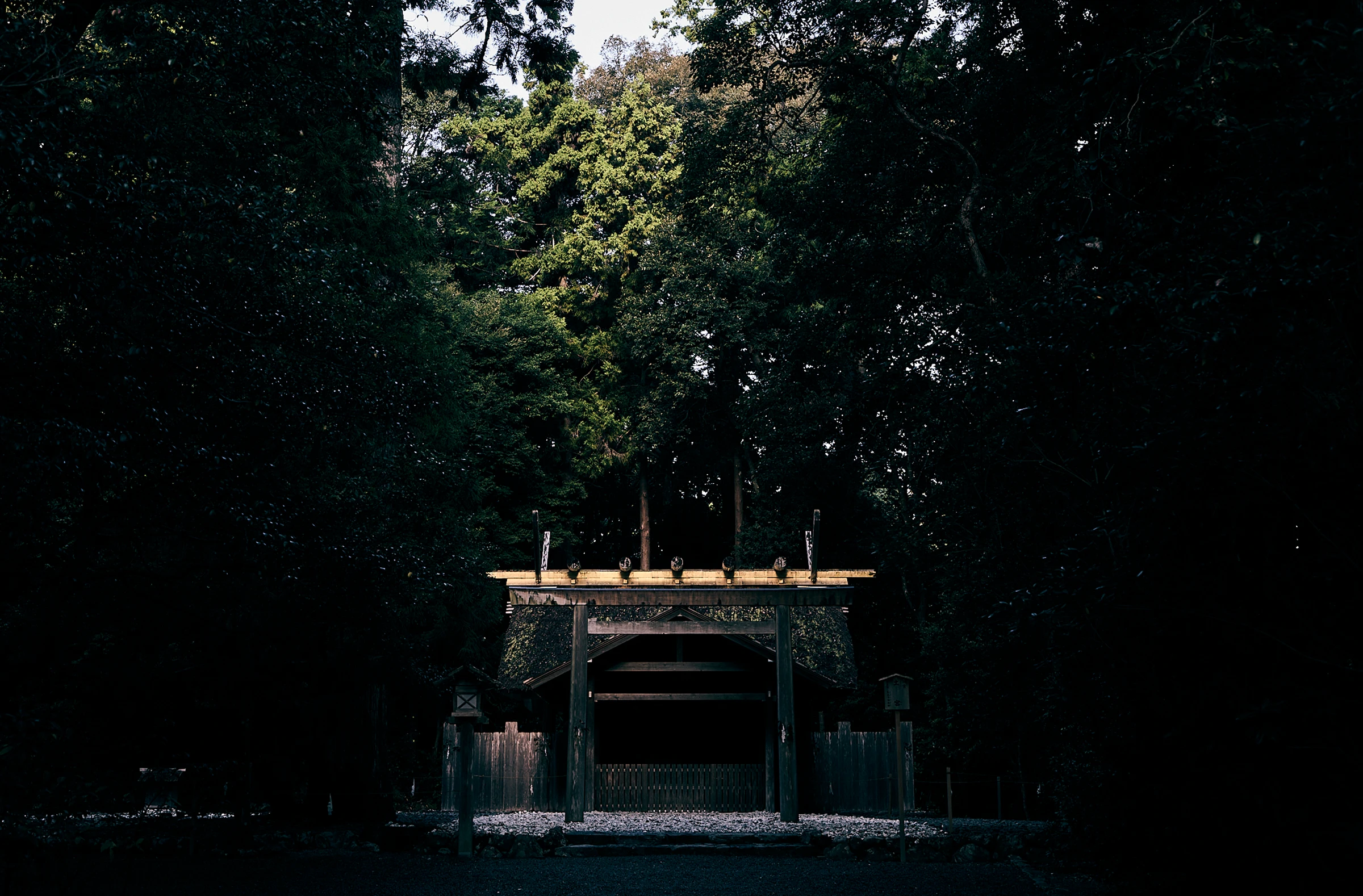
A visit to Ise Jingu Shrine in Mie
Life dwells in what we hand on
Sustaining an initiative for over 1,000 years
Japan has a remarkable tradition known as Shikinen Sengu. This ritual has been practiced at Ise Jingu Shrine every 20 years for over 1,300 years. It involves the complete rebuilding of the shrine’s wooden structures. Since it takes place every 20 years, most people can experience it at least twice in their lifetime. The tradition serves as a way of passing down and preserving human skills, such as those of shrine carpenters, to the next generation. The trees used for reconstruction are carefully nurtured in the shrine forests and in Nagano’s Kiso Valley over 100 to 200 years before harvest. Meanwhile, the wood that has served its purpose after 20 years is recycled for use in shrines across Japan and even for making nameplates for private homes. This sophisticated “circular” system, in modern terms, reflects a deep understanding of nature’s characteristics and a respect for its blessings, and it has been sustained for more than 1,000 years.
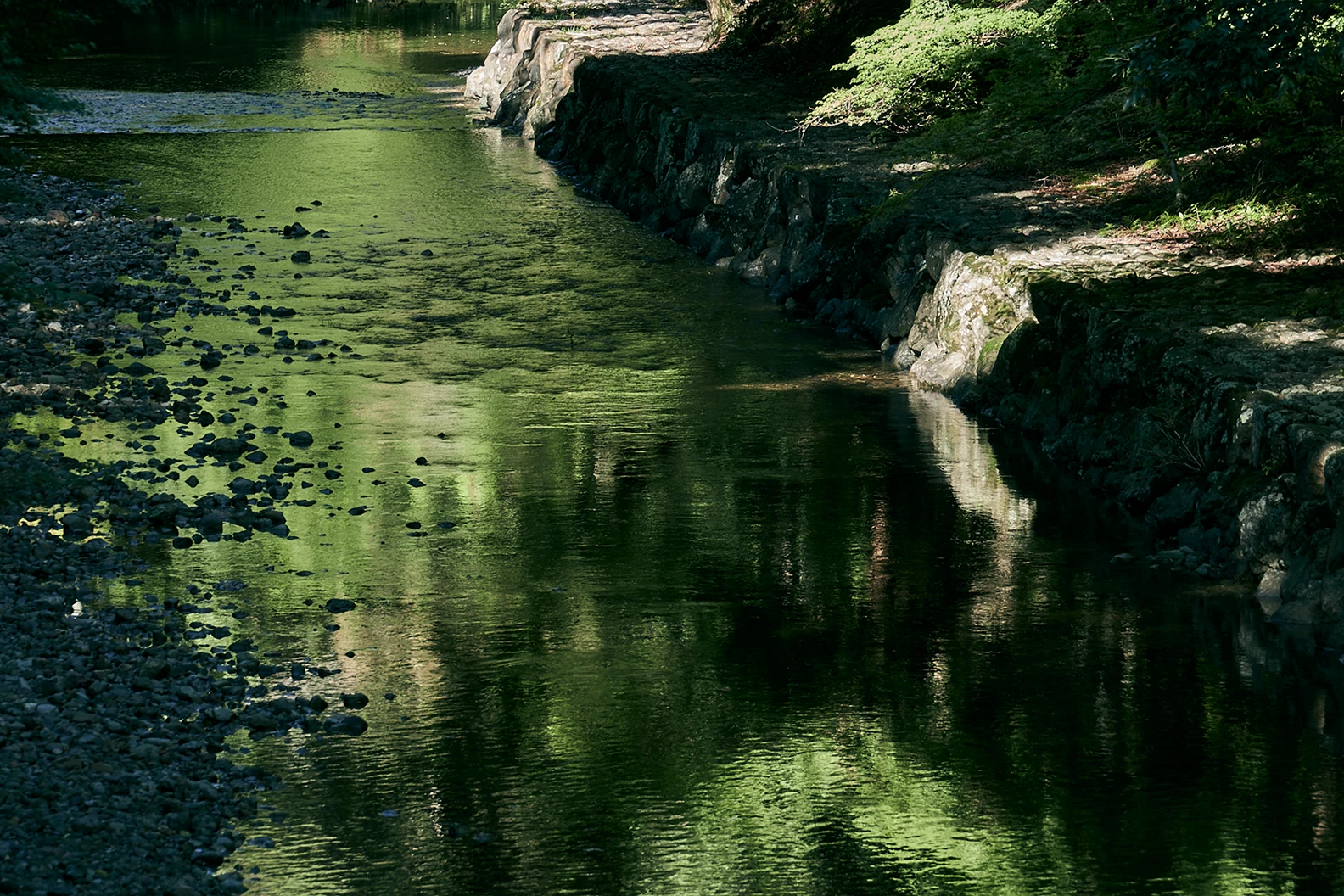
The forests upstream of the shrine, which are specially preserved for these rituals, help nurture mountain water that flows into rivers, nourishes rice fields, and eventually mixes with sea salt to become marine products, which are then offered at the shrine. In this way, another cycle of life is created. As local people take responsibility for performing these rituals and preserving the environment, their bonds with one another grow stronger.
One of the stories associated with Ise Jingu Shrine relates to a waka poem reportedly composed in the area by a renowned poet and traveller, Saigyo (1118–1190). “I know not what is enshrined here, but tears of gratitude overflow” These words evoke a sense of gratitude and awe in the presence of nature that transcends logic; a feeling of being sustained by nature’s immense power. This poem has endured for over 800 years and is passed down and recited by many people to this day, still resonating with our own view of nature. And the sense of awe and indebtedness to nature, whose might cannot be tamed by humans, are expressed by the devotion of the countless people who have sustained this ritual for over 1,000 years. In its commitment to sustainable initiatives, Amano Enzyme keeps in mind that this very cycle of observing and carrying on the grand rhythms of nature is a manifestation of the force of “life” and that we, too, are part of a single, vast living organism.
From growth to circulation
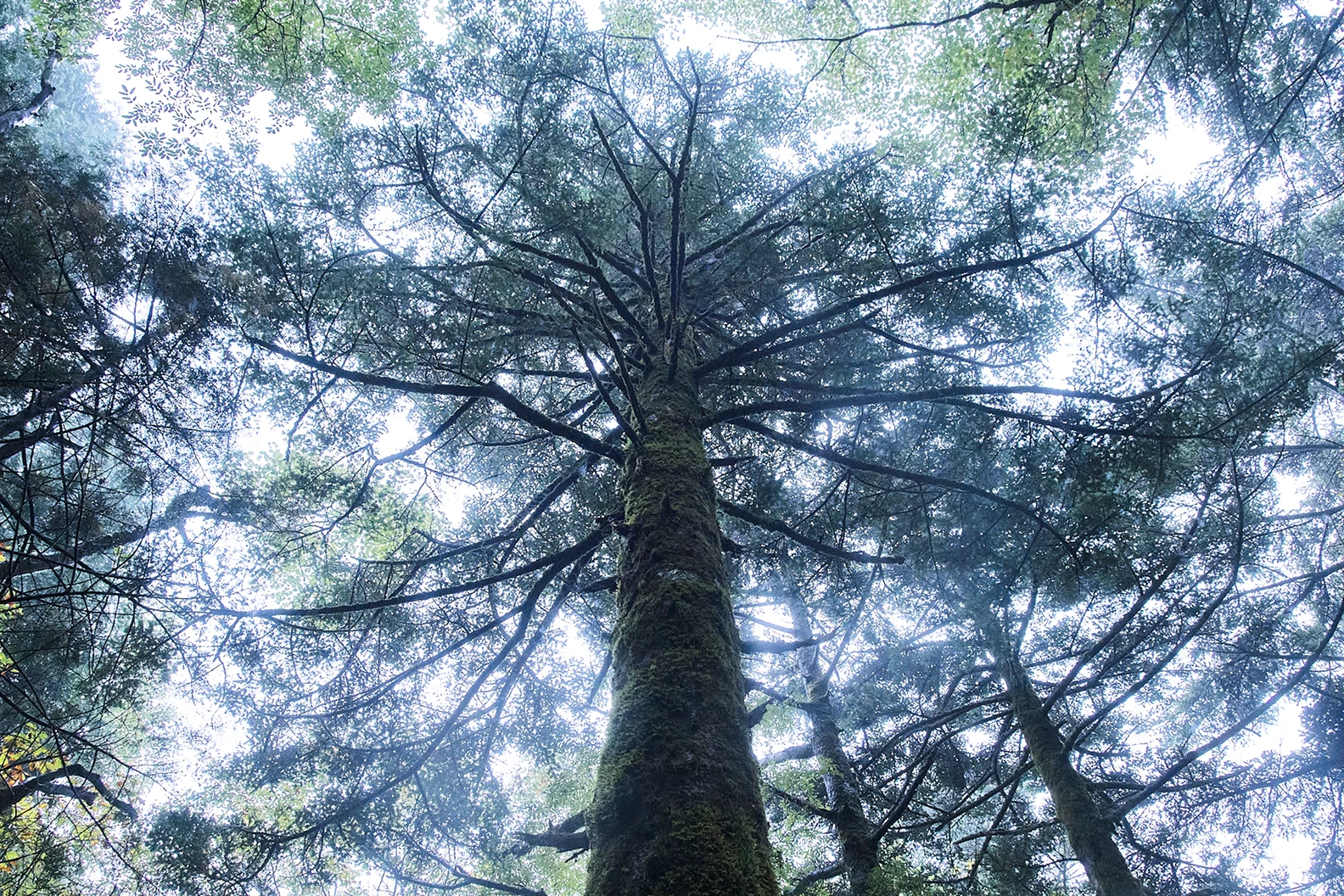
Although the term “sustainable” originated overseas, it has been “rediscovered” in Japan. Perhaps, the most important thing now is to take notice of the diverse human wisdom honed through the ages in accordance with unique environments and cultures of different territories. The Parthenon and the Colosseum are spectacular examples of the architecture of their times, now preserved as World Heritage Sites. In contrast, in the Shikinen Sengu ritual, structures are intentionally dismantled and rebuilt time after time. This practice not only enables the intergenerational transmission of intangible wisdom and techniques; it also serves as a means of engaging with and connecting to nature in a spirit of gratitude.
Another characteristic of Japan is the spirit of tokowaka (“perennial youth”). This does not mean staying forever unchanged but rather that continual regeneration is a way of attaining eternal life. Here, eternity is not found merely in maintaining and growing our own life here and now, but in embracing the full cycle of life by passing on our life to new forms of life. This spirit is very much evident in the Shikinen Sengu (the ceremonial reconstruction of Ise Jingu Shrine), and in traditional New Year celebration rituals that are so deeply familiar to the Japanese. At the end of each year, we perform a thorough cleaning, replace household effects, and undergo a rebirth to emerge with a pure heart to welcome the new year. Each time, we revive our world and celebrate it together with others. Just as plants bud, bloom, fruit, and wither through the four seasons before manifesting the new life that dwells within them come spring. Without any fear of continually regenerating and reinventing ourselves with the changing times, we never lose sight of what we can pass on to the next generation. We keep this in mind in all our decision-making at Amano Enzyme. We feel that with this spirit, we can stay ever fresh and endure for a long time to come.
<Special thanks to Ise Jingu Shrine and Kiyomi Chikusa (writer)>