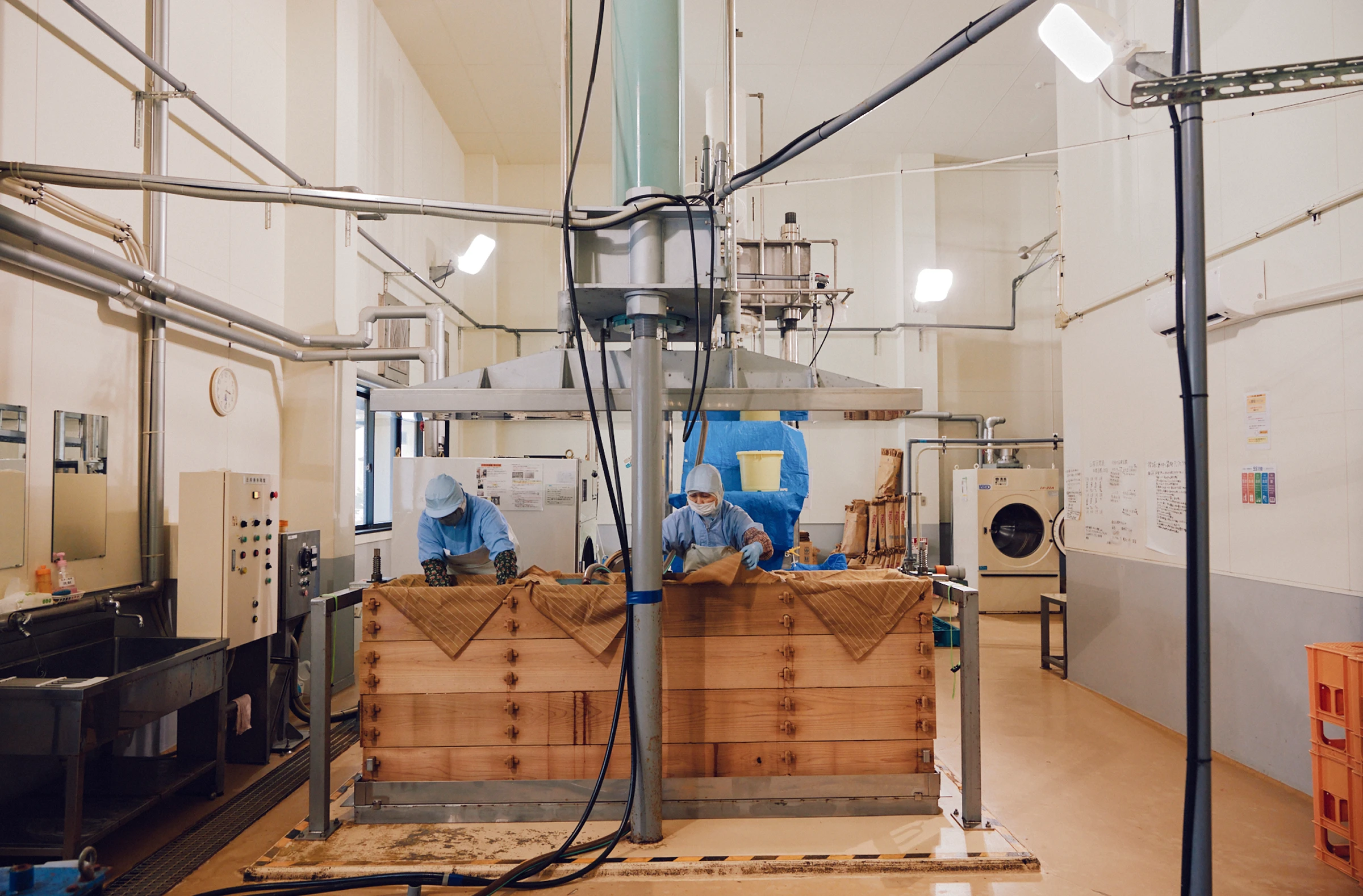
A visit to Yagisawa Shoten in Iwate
Tradition is built on challenges
Brewing serves to sustain the life of a community
Another annual destination for Amano Enzyme is Yagisawa Shoten, a traditional soy sauce brewery in Rikuzentakata, Japan’s Tohoku region. Even when the Great East Japan Earthquake of 2011 swept away its buildings and made production impossible, the brewery did not lay off any employees and continued paying their salaries. This reflected a strong belief that brewing culture helps sustain community life. In addition to preserving food, soy sauce has helped create jobs and support local economies. Soy sauce breweries have even helped their local communities survive crises by storing grain reserves in their warehouses and making use of wells that never run dry. With a renewed appreciation for the value of this traditional fermentation culture, Yagisawa Shoten is more committed than ever to preserving it.
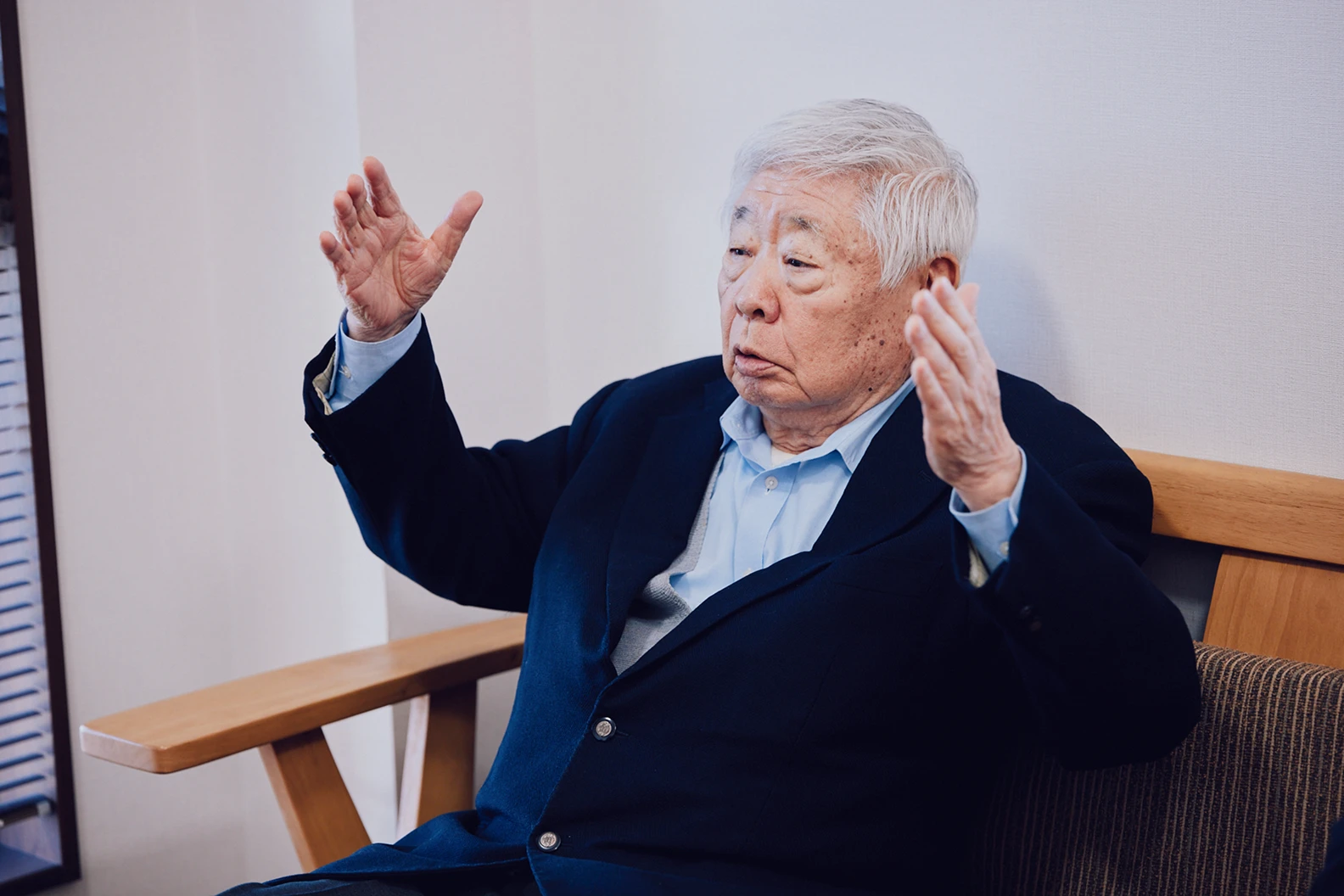
Under its former president, Yagisawa Shoten was known for its commitment to traditional methods, such as using locally sourced, organically grown ingredients, and for its deep concern for the region’s future and the decline of its food culture. Then, tragically, the brewery was swept away by a tsunami triggered by a massive earthquake. Miraculously, some of the moromi (fermentation mash), thought to have been lost, was found in the rubble. This made it possible to resume fermentation using the brewery’s long-preserved yeast culture. What is remarkable is that they not only restarted operations but also continued to take on new challenges. They attracted admirers abroad, including a three-star chef, invited visitors, and launched an “open university.” Comparing themselves to vigorous microorganisms, they continue striving to enrich the “soil” of their home region and the wider world. Company president Michihiro Kono often quotes the words of the famous local writer Kenji Miyazawa: “There can be no happiness for the individual until the whole world is happy.”
At Yagisawa Shoten, they believe that anything that does not continually evolve will die. In other words, they see tradition as a living, changing force. While words like “carry on” and “preserve” may suggest keeping things exactly as they are, a tradition endures precisely because it embraces new challenges, adapts to changes in time, place, and consumer needs, and continues to evolve. What drives this willingness is the desire to sustain the life of the community. This is the philosophy they arrived at after reflecting on what truly matters when viewed from a 100-year perspective.
Japan, a “superpower” of microbial resources
At Amano Enzyme, we want to play a part in solving the problems of humanity. At our Innovation center in Gifu Prefecture, our research and development approach is fully open to both cutting-edge and traditional technologies. On the one hand, we employ the latest and most advanced biotechnologies such as genetic engineering, protein engineering, and genome screening. At the same time, we apply traditional techniques like natural screening and breeding, and we explore the unknown functions of microorganisms by analysing our library of approximately 20,000 strains, collected from soils all over the world. Japan is home to a vast and incredibly diverse range of microorganisms, which represents an incredibly rich resource. It is a veritable “superpower” of microbial resources. This is due to the country’s landmass stretching over a huge distance from north to south, and its vast expanse of territorial waters. On top of this, the altitudinal distance from the summit of Mount Fuji to the bottom of the Izu-Ogasawara Trench (at 9.8 km or more below sea level) is an amazing 14 km.
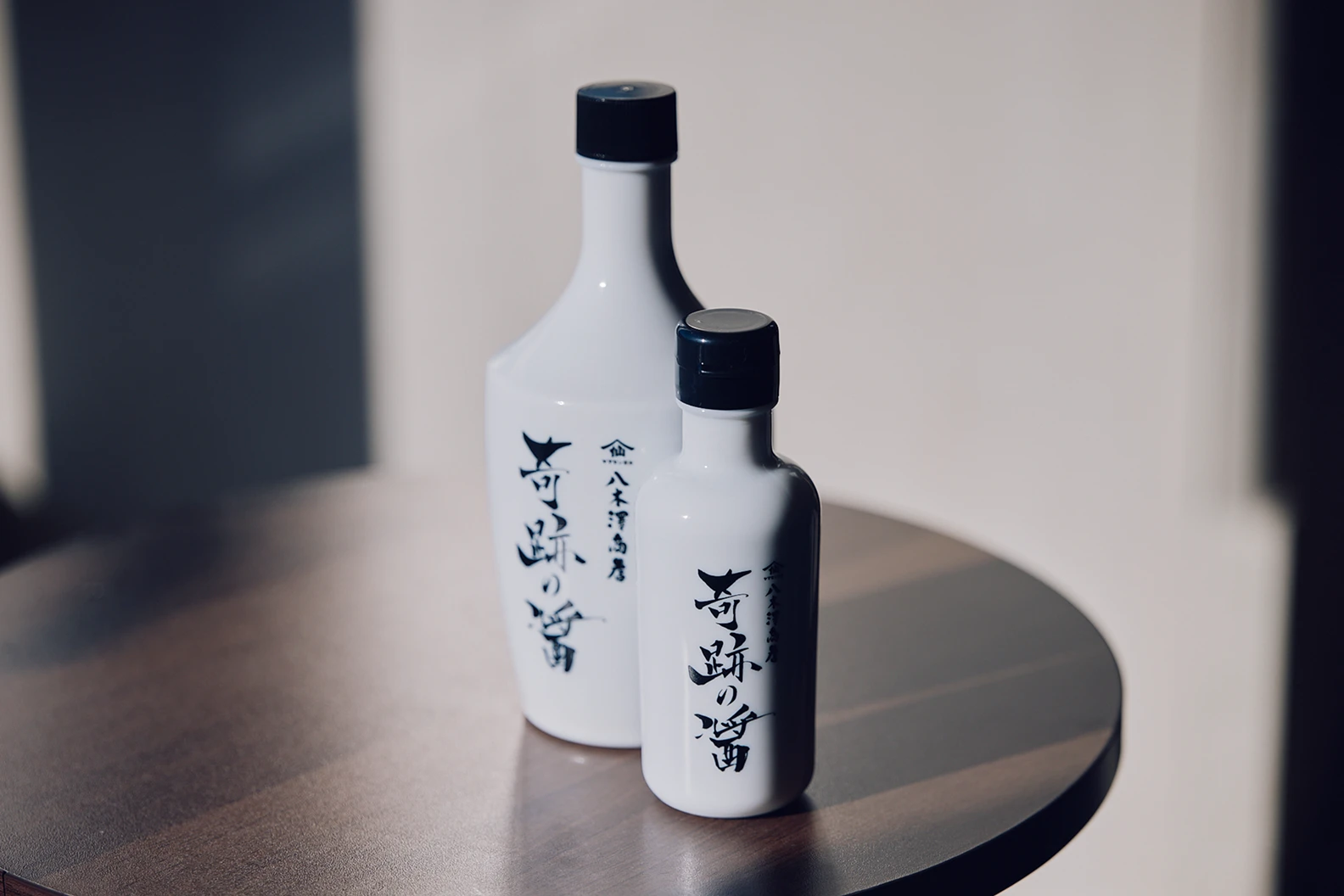
At Amano Enzyme, we take a Western approach to “invention” by designing enzymes to match a human-conceived target. At the same time, we value the Japanese approach of “discovering” nature’s limitless bounty, rooted in the belief that life exists in all things. This is because nature contains microorganisms capable of producing enzymes with functions beyond our current understanding. For this reason, we believe disruptive innovation is less likely to come from advanced technologies such as genetic engineering, which create what humans intend, than from traditional techniques such as screening, which can reveal what lies beyond human expectation. Guided by this conviction, we continue to pursue new discoveries using methods that are now rarely used anywhere in the world.
<Special thanks to Yagisawa Shoten>