What do we seek to sustain?
Reflecting on the future of capitalism and sustainability
- Here, we discuss sustainability with Amano Enzyme President Motoyuki Amano!
-
During a recent visit to Europe, I was struck by how deeply the SDGs have become integrated into everyday life. As long as the SDGs continue to be treated as “news” in the media, as they often are in Japan, we still have a long way to go. In Europe, the concepts behind the SDGs appear to have permeated daily life, and a wide range of initiatives are underway to achieve carbon neutrality. Although Europe is often regarded as a conservative region, I clearly sensed that industry, government, and academia are working together to drive meaningful change.
- What is driving the growing awareness of sustainability in Europe?
-
One reason behind the strong call for sustainability is a growing sense of crisis. In addition to global warming, the world’s population is approaching 10 billion, and there is a growing recognition that this level of humanity cannot be sustained without radical change. What impresses me most about the way European people and companies are responding to this global challenge is their ability to champion a noble cause on the international stage while ensuring that their efforts also deliver tangible economic benefits. In Japan, I often encounter the mindset that “it’s okay if we do not make a profit because we are doing something good.” However, we can make a genuine contribution to global sustainability only through initiatives that are themselves sustainable. From my perspective, the European approach is to secure solid profitability in order to achieve both economic and environmental sustainability. That is why global challenges are seen not only as noble causes, but also as opportunities for business and technological advancement. By contrast, the United States is generating unprecedented innovation through its strong culture of individualism and startups, rather than the collaborative model seen in Europe, where industry, government, and academia work together. Both Europe and the United States are acting with a strong awareness of their global economic influence and voice. Japan needs to consider how it can operate effectively within this framework.
- Can a healthy environment coexist with a healthy economy?
-
Around 30 years ago, while visiting Scandinavia, I saw a sign in a hotel that read, “Do you know how much water it takes to wash this towel you have used?” I was a little shocked because environmental awareness had not yet taken root in Japan at that time. A major wind power company was already operating in Denmark, so they were quite advanced. In Japan, meanwhile, environmental NGOs and groups were getting off the ground, but environmental consciousness had barely penetrated the sphere of corporate management. I used to feel conflicted, fearing that doing what’s good for the planet was too difficult to balance with business management. After touring Europe and seeing the situation there firsthand, I came to understand that there is indeed a way to balance economic and environmental needs, provided there is technological innovation.
- What do companies need to prioritize to strike a balance between economic and environmental goals?
-
A strong economy is essential to preserving democracy and capitalism, which have enriched our world. At the same time, Amano Enzyme is committed to serving not only those directly associated with the company, but society as a whole. We believe that as a company and its employees grow together and increase revenue, the scope of our social contribution expands accordingly, and that profits are what sustain such contribution initiatives. From a sustainability perspective, rather than reacting to short-term fluctuations, it is essential to adopt a strategy that evaluates corporate progress based on what can realistically be achieved over the medium to long term. In recent years, an increasing number of companies have chosen to go private. Perhaps this reflects the emergence of an era that allows for greater diversity in the forms capitalism can take. The issue is not which approach is superior; rather, society needs greater diversity. Ultimately, what matters most is that all stakeholders are satisfied.
- Living in harmony with the environment has become a major public concern. Can enzymes play a role in this challenge?
-
Biotechnology is currently attracting tremendous public attention. I have worked in this field for more than 40 years, yet I never imagined a time when enzymes would draw such widespread interest. At Amano Enzyme, we receive inquiries from a wide range of industries, many of which express great interest in and amazement at today’s biotechnology. Much of this progress has been driven by remarkable advances in computer science. Enzyme research requires highly accurate prediction of 3D structures, and today’s computing power now makes possible calculations that were previously too computationally intensive to attempt. These technological advances may enable us to replace many products traditionally manufactured from petrochemicals with biotech-based alternatives, resulting in materials with a lower environmental impact. This is one reason biotechnology is attracting so much interest across many different industries.
- If we used biotechnology to produce everything we now make through chemical processes, would that be a major step forward to carbon neutrality?
-
I think so. However, in practice, it is very difficult to replace the wide range of products currently made from petrochemicals with bio-based alternatives. For this to become a reality, the cost of bio-based products must fall to a level comparable to that of chemical-based products. Over the years, we have seen many technologies capture public attention, only to disappear before becoming established due to cost and other challenges. We are currently in a kind of “bio boom,” but even if the excitement subsides, true innovation will be driven by those who continue their research with unwavering commitment. Amano Enzyme has begun working with startups that possess this kind of technology and conviction. We are doing more than investing in these partnerships; we are also exploring forms of collaboration that can generate business synergies.

- Are there any differences between Japan and the rest of the world in terms of their approach to biotechnology?
-
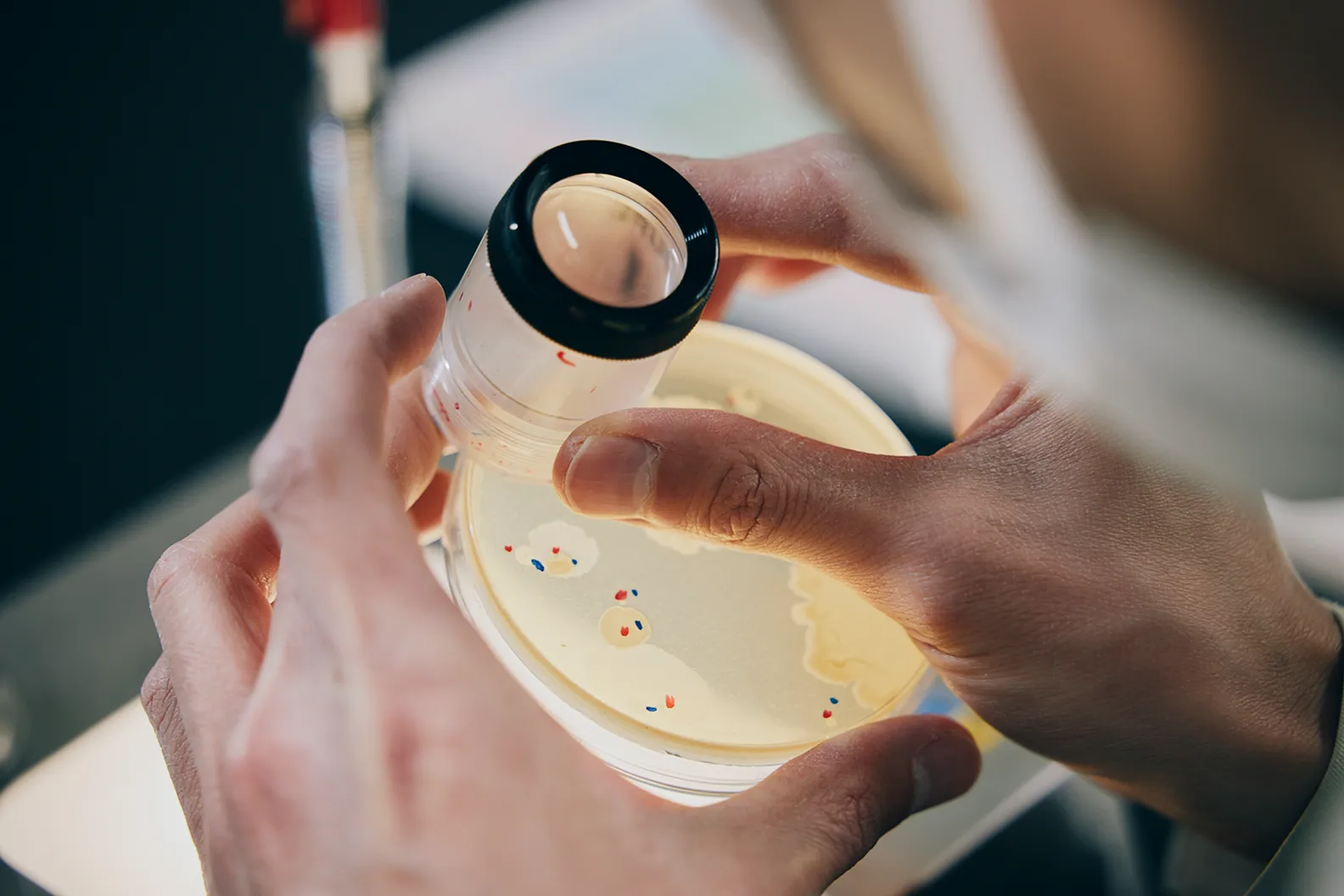
Coexistence with nature is in the spirit of the Japanese people, influenced by the philosophies of Shinto and Buddhism. I think this mindset is reflected in our approach to biotechnology, in the difference between searching in nature for new microorganisms and trying to create them through genetic engineering. Since Japanese researchers are aware that only 0.01% of microorganisms in the natural world have been identified, they believe that there is effectively infinite potential to discover enzymes with unimaginable functions in soil. That’s why they continue to patiently search for microorganisms in the soil using a method called screening. The Western approach, in contrast, typically focuses on designing target enzymes using genetic engineering. In recent years, technologies for AI-based prediction of enzyme protein structures and for computer-aided protein design have won Nobel Prizes. However, the number of enzyme companies with cutting-edge technology that also continue to use screening and other traditional research methods is declining. This is precisely why Amano Enzyme pursues both traditional methods and advanced biotechnology in its quest for innovation. We want to utilize the strengths of both approaches so that we can offer our customers every possible advantage. Of course, safety is the highest priority in both cases.
- What area of sustainability is Amano Enzyme currently focusing on?
-
Reducing food waste. A common concern in the food industry is “how we can use every last bit of food?” Enzymes can play a role here. They can help to eliminate waste by allowing ingredients to be more fully consumed. They can help to extend shelf life and make food tastier and easier to eat. However, no matter how environmentally friendly a solution may be, if a food is not delicious, people won’t stick with it. Enzymes can also help to make plant-based meat and soy protein tastier. Like this, if we can utilize Japanese ingredients more fully, we can reduce the environmental impact of logistics. There are so many other ways that enzymes could contribute to environmental issues, apart from food waste. Humanity is nearing a historic turning point toward a circular economy. I am confident that biotechnology will play a big part in this revolution.
- There are high hopes for enzymes in the field of sustainability. What are Amano Enzyme’s strengths in this field?
-
The inquiries we receive at our company are often very specific and specialized. For example, we get requests for enzymes that can convert a certain substance or break down certain cells, to improve a process for dyeing textiles, or for extracting oil. While there are many different areas of research of varying scale in the world, we believe that it is essential to focus on areas that align with the company’s character and enable us to deliver maximum value within the limits of the resources available to us. This philosophy is at the heart of our greatest strength—the ability to offer tailor-made specialty enzymes. Of course, other companies that deal in enzymes may have a different perspective. For Amano Enzyme, it is crucial to thoroughly understand and nurture our strengths, so that we can deliver high-value solutions to our clients in areas that align with those strengths.
- Moving forward, what does Japan need to do to achieve a circular economy?
-
Although calls to “pursue innovation” are heard everywhere, many people remain unconsciously constrained by the invisible limits of conventional wisdom. For example, I once heard of a foreign chef who, deeply impressed by katsuobushi (dried bonito), attempted to recreate it using pumpkin. Such an idea would likely never occur to a Japanese person whose thinking remains confined within established norms. This is also true in the world of art, where the creators who leave their mark on history are often those who have struggled to express themselves in ways that had never been attempted before. The same principle applies in R&D. Across cooking, art, and scientific research alike, those who produce work that is valued internationally do not simply operate within an existing field; they create a new field of their own. At Amano Enzyme, our employees are working diligently to pioneer innovations beyond the boundaries of conventional thinking. This reflects the company’s founding philosophy of “Making the Intangible Tangible.” In sustainability as well, we cannot return to the “good old days” of the past. Rather, we must generate innovation through ideas that are free from conventional frameworks. That is how we can preserve what is truly important.
- Finally, what are Japan’s strengths in terms of working to shape a sustainable world and what direction should it take toward that goal?
-
The high-tech approach to enzyme discovery relies on big data, which has now become a mainstream tool in the West. In a manner similar to protein design technology, we can essentially create new enzymes by leveraging human knowledge and data. This approach may be described as identifying substances similar to those already known to us. In that sense, rather than creating something entirely new to humanity, this process of “invention” is akin to drawing a blueprint for a target enzyme and then following it to produce the enzyme. By contrast, the traditional approach draws on materials sourced from nature, making it possible to discover microorganisms that produce enzymes with properties we could never have imagined. This, I would argue, is a true “discovery.” I believe that this traditional technological approach, which enables disruptive innovation that goes beyond the limits of human imagination, may be one of Japan’s strengths.
The spirit of altruism that the Japanese have long esteemed stems from their empathy and imagination for others and for things that are not visibly present here and now. This has developed because we have expressed gratitude and respect for the bountiful gifts of the natural world, people, local customs, and culture, since ancient times. I believe that this is the root of Japanese people’s capacity to work together as a team, even globally, on research or any other kind of project, without problems of hierarchy—a virtue that we are widely appreciated for. In my discussion of sustainability, I said quite a lot about Europe and the U.S. My hope is that referring to these positive global models can also help us to recognize and preserve Japan’s unique strengths.